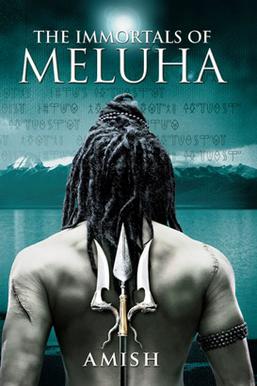
As soon as I had read (and reviewed) “The Immortals of Meluha“, I knew I had to read the sequel. It was too interesting to leave the trilogy midway and not know what happens next.
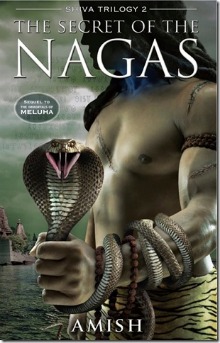 "The secret of the Nagas" is the second part of the Shiva trilogy and is
a sequel to the book "The immortals of Meluha. It's a fictional account
of the famous Indian god Lord Shiva. The second book begins exactly
where the first had ended, in the land of the Chandravanshis, Swadweep.
Shiva is trying to find the Nagas who have killed Brahaspati, a brother
like figure to Shiva. While on the trail he discovers various facts,
meets different people making him ponder about good and evil while also
uncovering many interesting facts about the Nagas. Various events lead
him to question his mission and if it actually serves it's purpose.
The Secret of the Nagas is a fitting sequel to the Immortals of Meluha. This book leaves you with the same experience as the previous one although it's never repetitive and even more adventurous. As you read more you seep into Indian mythology discovering various facts about gods, rivers, war techniques, customs of various sects, religion, cultural practices while never being disengaged from the plot. As, in the first book Shiva is always on the move, traveling to different places. His relationship with Sati and other central characters evolve and many new characters are also introduced. The author gives a very good back story to each character and does a very good job in providing the perspectives of different cultures through the characters.
Being Indian, I have grown up on stories of different gods giving numerous examples of bravery, good and their quest in the destruction of evil. But, there was always an alien connection with the stories, in the sense that the stories told comprised of people who were more than the average human making the characters always larger than life and non-believable. The best part of this trilogy is, it sort of dispels that notion and treats the protagonist, Shiva, like a regular individual but with the exception that the destiny of God awaits him, making it lot easier to relate with the character.
All in all, the book was a
fantastic read, continuously engaging and adventurous. The suspense and
the interesting dialogues never let the book get boring. The negative
points of the book are that the writing lacks at times, not providing
the "punch" that maybe needed in certain situations. Also, Shiva's
character can be further explored but the author always limits himself.
He never delves into his feelings, the reader is left with a certain
disappointment that, most of the time, only his actions rather than his
feelings are written about. But, the plot is executed perfectly and the
pieces fit into the puzzle without any blemishes. So, I would definitely
recommend this book.
This is definitely a must read and like I said when reviewing The
Immortals of Meluha: "Should you read this book? Definitely. But if you
hate cliff hangers (which is how this part ends) then you may be better
off waiting for all the books to be released before starting on this."
Part 3 : Oath of the Vayuputras is sue for release sometime next year.